

Choosing the right storage unit size can be tricky. You need enough room for your furniture, boxes and other belongings, but you do not want to pay for space you will not use. The best size depends on how much you plan to store, the size of your largest items and how neatly everything can be packed. If you are wondering, “What size storage unit do I need?”, this guide explains how to estimate the space required for anything from a few boxes to the contents of a full house.
Storage Unit Size Guide: How Much Space Do You Need?
As a starting point, the amount of storage space you need depends on the volume of your belongings, not just the number of rooms in your home. Two one-bedroom flats can have very different storage needs if one contains lots of large furniture and the other has mostly small items. Use this table to estimate your requirements before choosing a storage unit.
| What you need to store | What to consider |
|---|---|
| Boxes only | Number of boxes, their sizes and whether they can be stacked |
| Studio flat | Bed, sofa, small furniture, appliances and boxes |
| One-bedroom flat | Bedroom furniture, living room furniture, kitchen items and boxes |
| Two-bedroom home | Additional beds, wardrobes, desks, seating and household items |
| Three-bedroom home | Furniture from several bedrooms, larger sofas, dining sets and more boxes |
| Full house contents | All furniture, appliances, boxes, outdoor items and bulky belongings |
These are starting points rather than fixed size recommendations. The actual storage unit you need will depend on your inventory, the dimensions of individual items and the usable space available in the unit.
What Size Storage Unit Do I Need for a One-Bedroom Flat?
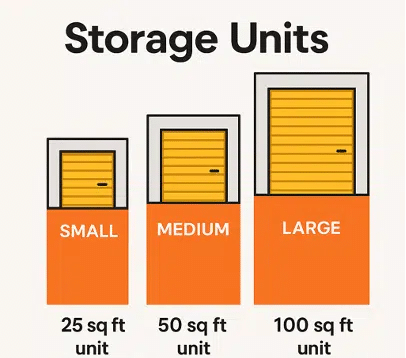
For a one-bedroom flat, start by listing the furniture and belongings you plan to store. A typical list might include a double bed, mattress, wardrobe, chest of drawers, sofa, coffee table, dining table, chairs, kitchen equipment and several boxes. However, not everyone needs to store everything. If you are keeping your bed and sofa at home, for example, your storage requirements could be much smaller.
Think about three main factors:
- Furniture: Large wardrobes, beds, sofas and dining tables take up more room than small household items.
- Boxes: Books, clothes, kitchenware and decorations can add up to a surprising amount of space.
- Packing and dismantling: Taking suitable furniture apart can make it easier to arrange items efficiently.
The same approach works for a studio or a two-bedroom flat. Count the belongings you actually intend to store rather than choosing a unit based only on the number of bedrooms.
How Much Storage Space Do I Need for Furniture?

Furniture can take up a large share of your storage space, particularly when it includes bulky or awkwardly shaped pieces. Before choosing a storage unit for furniture, measure your largest items and make a list of everything else. Measure the height, width and depth of each item. For a rough estimate of its cubic volume, multiply these three measurements, using metres for all dimensions.
For example, a wardrobe measuring 1.8 metres high, 1 metre wide and 0.6 metres deep has an approximate external volume of 1.08 cubic metres. This calculation helps you compare the size of individual items, but it does not tell you exactly how much storage space you will need. Furniture cannot always be placed tightly together, and the shape of the unit affects how well everything fits.
Leave room for practical considerations, such as:
- The space needed to position larger items.
- Gaps between furniture that cannot safely be stacked.
- Boxes that need to sit beside or on top of suitable items.
- Access to belongings you may need to retrieve later.
Adding up the volume of your belongings is a useful first step, but you should not assume that their combined volume will fit perfectly into a unit of the same cubic capacity.
How Do I Calculate Storage Space?
You do not need specialist equipment to estimate your storage needs. A simple inventory, a tape measure and a few calculations can give you a clearer idea of how much space to look for.

1. Make an inventory
Walk through each room and write down everything you intend to store. Include furniture, appliances, boxes, suitcases and any outdoor belongings. Separate items you will store from those you will sell, donate or take to your new home.
2. Measure bulky items
Measure the height, width and depth of large furniture. Sofas, wardrobes, beds, bookcases and dining tables deserve particular attention because their shapes can make them difficult to arrange.
Remember to measure items in the condition in which they will enter storage. If you plan to dismantle a bed frame or table, consider the dimensions of the separate parts.
3. Count your boxes
Estimate the number of boxes you will need and note their approximate dimensions. Standard-sized boxes are easier to plan around than a mixture of unusually shaped containers.
If you have not packed yet, allow some flexibility. The final number of boxes may change once you start sorting your belongings.
4. Estimate the total volume
For each item with a roughly rectangular shape, multiply its height by its width and depth to estimate its cubic volume. Add the results together for a rough estimate of the volume of your belongings. This is where a storage space calculator can help. A basic calculator can add the estimated volumes of your furniture and boxes, but it cannot fully account for awkward shapes, gaps or stacking limits.
5. Check the unit’s actual dimensions
Before making a decision, check the storage unit’s height, width and depth, as well as its usable capacity. A unit with the right cubic volume might still be unsuitable if a large wardrobe cannot fit through the entrance or there is not enough room to arrange your belongings. If you are unsure, ask the storage provider to review your inventory and suggest a suitable size.
What Affects the Storage Unit Size You Need?
Even if two households have similar amounts of furniture, they may need different storage space. Several practical factors can affect your estimate.
- The type of furniture: A large corner sofa, deep wardrobe or solid dining table can take up more room than several smaller pieces. Measure bulky items individually rather than relying on a general estimate.
- Whether furniture can be dismantled: Removing table legs, bed frames or suitable shelving can reduce the space needed for some items. However, not every piece should be dismantled, and you should keep fittings together so that reassembly is easier.
- The number of boxes: Clothes, books, kitchenware, toys and decorations can fill a unit quickly. Packing boxes consistently and stacking suitable ones can help you use the available space more effectively.
- How you plan to arrange your belongings: Furniture and boxes that can be positioned neatly may use space more efficiently than items with irregular shapes. However, do not force items together or stack heavy objects on furniture that could be damaged.
- Access to your belongings: If you need to retrieve particular boxes or furniture during storage, you may need extra room to reach them. Filling every available gap is not always the most practical arrangement.
How to Prepare Furniture for Storage Without Wasting Space
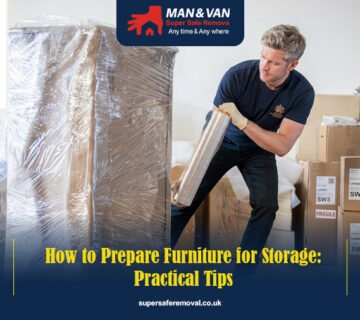
Preparing furniture for storage helps you make better use of the available space while reducing the risk of damage. Start by cleaning furniture and allowing it to dry completely. Dirt, food residue and moisture can cause problems if items remain packed away for a long time. Where appropriate, dismantle furniture such as bed frames and tables to make it easier to position. Keep screws, bolts and other fittings in labelled bags attached to the relevant furniture parts.
Use suitable furniture covers to protect surfaces from dust and scratches. For upholstered furniture, choose a cover that allows appropriate airflow rather than sealing damp fabric inside plastic. Wooden furniture should also be dry before it is covered or placed in storage. When packing furniture for storage, avoid placing heavy boxes on delicate surfaces or upholstered items. Arrange belongings so that they remain stable, and do not block ventilation where it is provided.
For more detailed advice on Furniture storage preparation, follow a dedicated furniture preparation guide. These furniture storage tips can help you protect furniture in storage without making your space estimate unnecessarily complicated.
What Size Storage Unit Do I Need When Moving House?
When moving house, your storage requirements depend on which belongings need to be stored and which will go directly to your new property. If you are moving from a two-bedroom flat but only need to store a sofa, a bed, a wardrobe and a few boxes, you may need considerably less space than someone storing the entire contents of the same flat.
Before choosing a unit, confirm what will be stored, measure the larger items and count your boxes. If you are storing most of your household belongings, include items from cupboards, lofts, sheds and spare rooms rather than estimating from the main living areas alone. If you need storage between properties, Storage between house moves can help you explore the options available for your situation. For a wider overview of available options, see our Storage Services across London. The key is to estimate the belongings you need to store, not simply the size of the property you are leaving.
Choose the Right Storage Space for Your Belongings
So, what size storage unit do you need? The answer depends on the amount and type of furniture, the number of boxes, how your belongings are packed and how much access space you need. Start with an inventory, measure your larger items and estimate their cubic volume. Then check the unit’s dimensions and usable capacity before deciding. This simple process can help you avoid choosing a unit that is too small or paying for space you do not need. If you need help working out your requirements, explore Super Safe Removal’s storage options across London and ask for guidance based on the belongings you plan to store.




No comment