
How long does a house removal take? There is no single answer, because every move is different. A small, well-prepared flat with easy parking can be done in a few hours. A larger home with several floors, a tight street and a long drive between properties can take most of the day, or longer. This guide explains what changes the time needed, so you can plan moving day with confidence. If you’re booking house removals in London, it will help you decide how much time to set aside.
How long does a house removal take by property size?
Here is a rough guide to how long removals take for different homes. These timings cover loading, the journey and unloading. They assume you are fully packed and the access is straightforward.
| Property size | Rough time for the move |
|---|---|
| Studio or one-bedroom flat | 2 to 4 hours |
| Two-bedroom home | 3 to 5 hours |
| Three-bedroom home | 5 to 8 hours |
| Four bedrooms or more | A full day, sometimes longer |
Treat these as a starting point, not a promise. The number of bedrooms matters less than the number of belongings. Two people in a two-bedroom house with a loft full of boxes will take longer than a couple with minimal furniture. If you’re asking how long it takes to move a 2-bedroom house, the answer is often half a working day. Add time if you have a large garden, a garage or a lot of bulky furniture.
What happens on moving day?

Understanding the moving-day schedule helps you see where the time goes. A typical house removal has five stages.
- Arrival and walkthrough. The removal team arrives, looks around and agrees with you what is going. They protect floors, doorways and banisters.
- Dismantling furniture. Beds, wardrobes and large tables may need taking apart. This is quick if you have prepared in advance. Our guide on how to prepare furniture for moving day shows you how.
- Loading. This is usually the longest single stage. If you want to know how long it takes to load a removal van, it depends on how much you own, how well it is packed and how far the team must carry it.
- Travel. The drive depends on the distance between the two properties and the traffic.
- Unloading and reassembly. Unloading is often quicker than loading, because the team knows where everything goes. Reassembling furniture adds time if it is part of your booking.
Collection and delivery times matter too. If you are waiting for keys at the new home, the team may have to wait before unloading. Check your handover time and tell us about it when you book.
Why can London moves take longer?
London adds its own challenges. A short journey on the map can take much longer in busy traffic, especially at rush hour. These are the most common causes of delay:
- Traffic in London. Congestion can stretch a 20-minute drive into an hour or more.
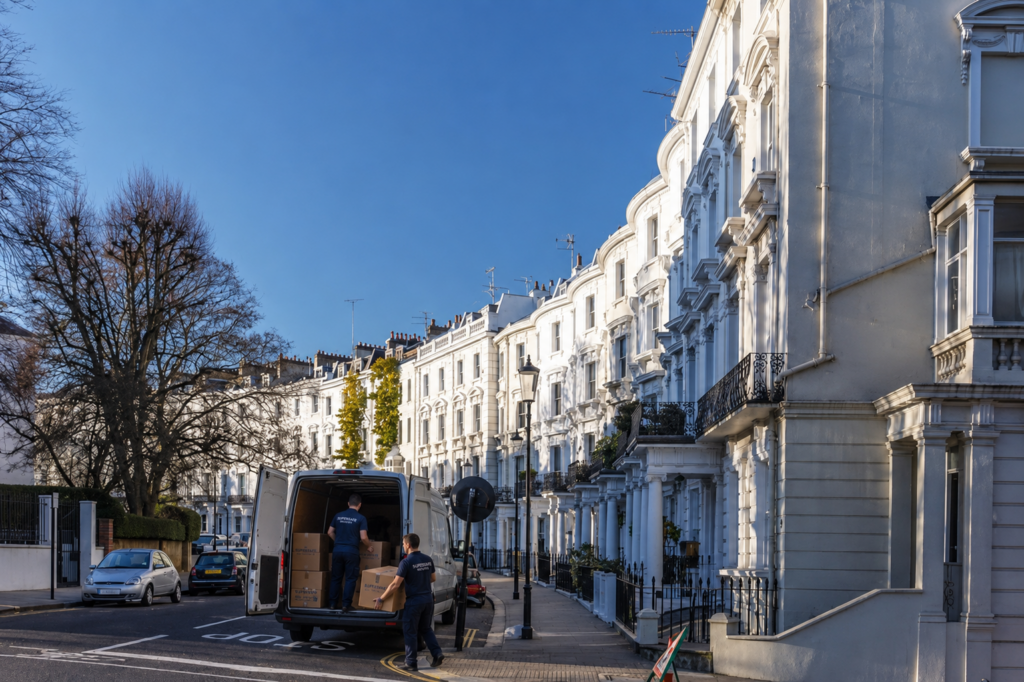
- Parking restrictions. If the van cannot park close to your door, every trip takes longer. Resident bays, yellow lines and busy roads all make this harder.
- Controlled access. Some blocks need a lift booked in advance, or only allow moves at set times.
- Stairs and lifts. Carrying items up several floors is slower than loading from the ground floor. A small lift can also limit how much goes down at once.
- Parking distance. Even a 50-metre walk from the van to your front door adds up over a full load.
What affects house removal time?
In short, these are the main factors:
- Property size and the number of belongings
- Whether packing is complete
- Access to the property
- Stairs and lifts
- Parking distance
- Dismantling furniture
- Travel time between the two homes
Moves with several of these at once, such as a large home, a top-floor flat and no nearby parking, take the longest.
How to keep your move on schedule
You can’t control the traffic, but you can avoid most other delays. Here is what helps.
- Finish packing before the team arrives. Unfinished packing is one of the most common reasons moves overrun. Everything should be boxed and ready to go.
- Label your boxes. Clear labels mean boxes go to the right room first time. See our guide on how to label moving boxes.
- Clear walkways. Move bags, shoes and loose items out of halls, stairs and doorways.
- Arrange access and parking. Book the lift, ask for a parking permit or bay suspension if you need one, and make sure keys are available.
- Tell us about access problems. Narrow stairs, a long walk to the van or limited parking should be mentioned when you book. It helps us plan the right team and time.
How to plan your moving day
Don’t schedule moving day too tightly. Leave a buffer, because a small delay in the morning can affect everything after it. Avoid booking key collection, cleaners or other appointments at fixed times straight after the move. If you can, allow extra time at both ends. If you are also planning the weeks before the move, our complete house-moving checklist covers the full preparation. A calm, flexible plan is also safer. Rushing leads to damaged items and missed boxes.
Frequently asked questions
For many flats and smaller homes it takes a few hours. Larger houses can take a full day. It depends on the property, your belongings and the journey.
In most cases, yes. Very large homes, or moves with difficult access or long distances, may need more time or extra crew.
It can. Within London, traffic often matters more than the number of miles. Longer journeys add travel time to every load.
Get an accurate estimate for your move
So, how long does a house removal take for you? An accurate answer depends on your property, the volume of belongings, the access at both ends and the journey in between. To find out how long your move is likely to take, talk to Super Safe Removal. Tell us about your property, your parking and your timings, and we will plan a realistic moving day. Request a house removal quote today.





No comment