
Knowing how to label moving boxes can make moving day much easier. When dozens of boxes arrive at your new home, a simple label tells you where each one belongs, what is inside and which boxes need attention first. The best system does not need to be complicated. Label each box by room, add a short description of its contents, mark anything fragile or important, and give every box a number. This makes it easier for you and the removal team to organise everything when it arrives.
Choose a Moving Box Labelling System
Before you start labelling boxes for moving, decide on one system and use it consistently. A useful moving box labelling system can include five basic details:
- Room – where the box belongs
- Contents – a short description of what is inside
- Box number – a unique number for your inventory
- Special instruction – such as FRAGILE
- Priority – whether the box should be opened first
For example:
KITCHEN – Box 12 – Plates & glasses – FRAGILE – Open first
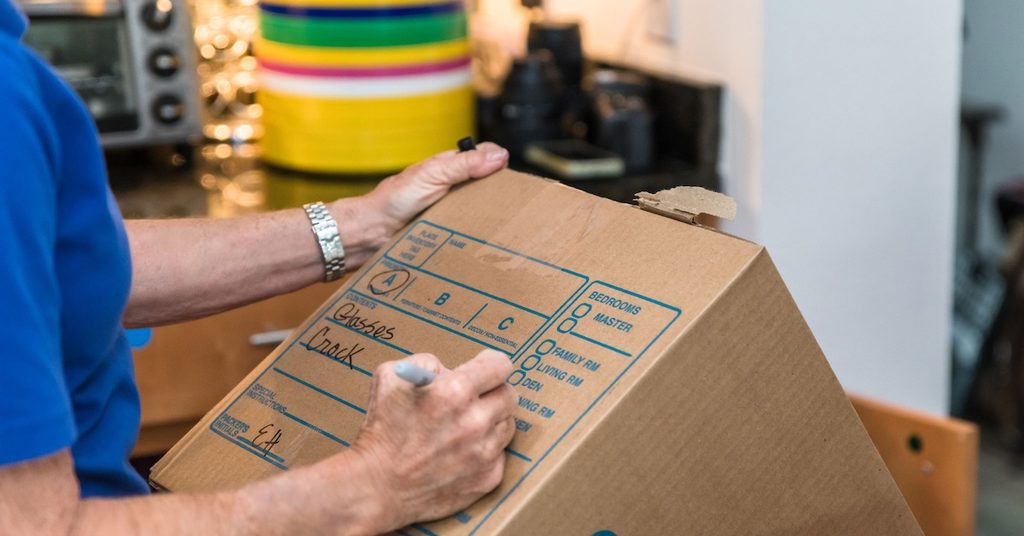
You can write this information directly on the box or use a label. The important thing is that the writing is large enough to see easily.
Should Moving Boxes be Labelled by Room?
Yes. Labelling boxes by room is one of the simplest ways to organise a move. Write the destination room clearly on at least one visible side of each box. If possible, put the room name on more than one side so it can still be seen when boxes are stacked. Useful room labels might include:
- Kitchen
- Living room
- Main bedroom
- Child’s bedroom
- Bathroom
- Home office
- Hallway
- Storage
For larger homes, you can be more specific. Instead of simply writing “Bedroom”, use “Main bedroom” or “Bedroom 2”. This helps the removal team place boxes in the correct areas without having to ask you about every item.
Add a Short Contents Description
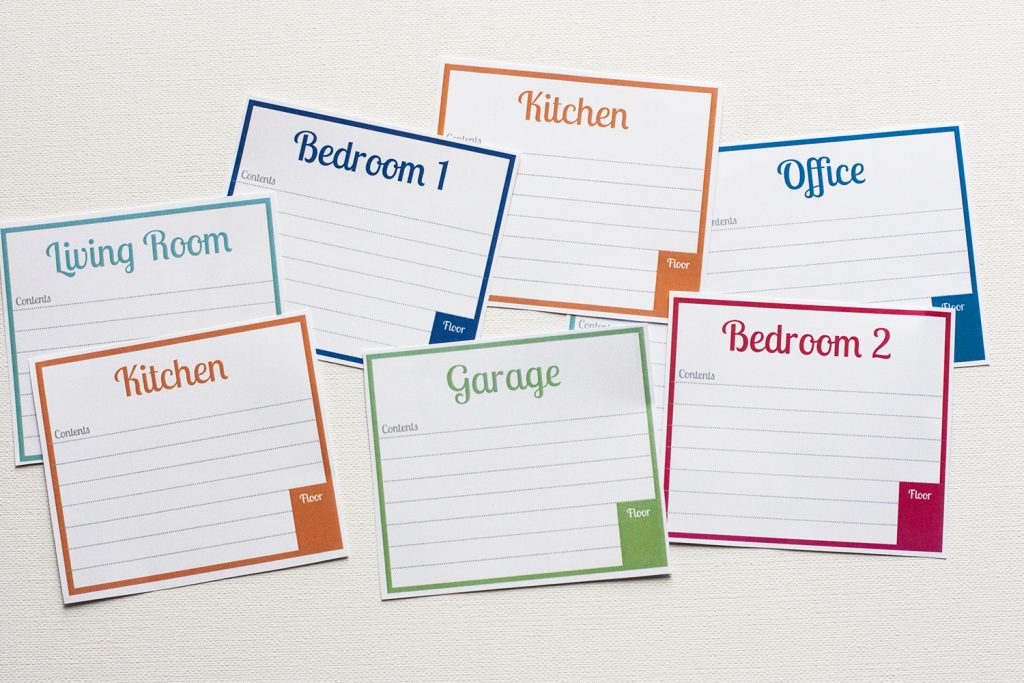
A room label tells you where a box belongs, but it does not tell you what is inside. Add a short description such as:
KITCHEN – Box 4 – Mugs & coffee items
or:
OFFICE – Box 7 – Cables & chargers
You do not need to list every individual item. The purpose is to give you enough information to identify the box without opening it. This is particularly useful when you need something soon after arriving at your new home.
Mark Fragile Boxes Clearly
If a box contains fragile items, make this obvious. Use a large FRAGILE label or marker that can be seen from a distance. You can also add a short description, such as:
LIVING ROOM – Box 8 – Glass ornaments – FRAGILE
This article is about identifying boxes, rather than explaining how to pack delicate belongings. For guidance on protecting fragile items during a move, see our fragile packing guide. The same principle applies to boxes containing items that need to remain upright or require particular attention. Make the instruction clear rather than assuming that someone will know what is inside.
Number Every Box
Adding a box number makes organising moving boxes much easier. Start at 1 and give every box a unique number:
- Box 1
- Box 2
- Box 3
- Box 4
The numbers do not need to represent a particular room or packing order. They simply give each box an identity. If a box goes missing or you need to check whether everything has arrived, you can refer to its number instead of trying to describe the box. Numbering also makes your inventory much more useful.
Mark Priority Boxes
Not every box needs to be unpacked on the first day. Mark boxes containing items you will need immediately with a simple instruction such as OPEN FIRST or PRIORITY.
These could include:
- Basic kitchen items
- Towels
- Toiletries
- Bedding
- Children’s essentials
- Pet supplies
- Important work equipment
- Basic cleaning supplies
For example:
BEDROOM – Box 3 – Bedding & towels – OPEN FIRST
Try not to mark too many boxes as priority. If everything says “open first”, the system stops being useful.
Keep an Inventory
A simple inventory can turn your box numbers into a useful tracking system. You can create a basic list with four columns:
| Box | Room | Contents | Priority |
|---|---|---|---|
| 1 | Kitchen | Plates and bowls | Open first |
| 2 | Bedroom | Bedding | Open first |
| 3 | Office | Cables and chargers | Normal |
| 4 | Living room | Books | Normal |
You do not need to record every item. A short description is enough to help you identify what is in each box. Keep the inventory somewhere easy to access, such as your phone, rather than packing the only copy inside one of the boxes.
Use Colour Coding if It Helps
Colour coding can make your labelling system easier to see, especially during a larger move. For example, you could use one colour for each room:
- Kitchen – one colour
- Bedroom – another colour
- Living room – another colour
- Office – another colour
You can use coloured stickers, tape or markers. However, colour should support your written labels rather than replace them. Someone helping with the move may not know what each colour means. A clear “KITCHEN” label is more useful than relying only on a coloured sticker.
Label Boxes for the Removal Team
Think about your labels from the removal team’s point of view. The information should be visible, simple and consistent. Avoid writing a long description that takes time to read. A useful label might look like this:
- KITCHEN
- Box 12
- Plates & glasses
- FRAGILE
- OPEN FIRST
This immediately answers the main questions: where does it go, which box is it, what is inside and does it need special attention? If you have a floor plan for the new property, use the same room names on your labels and on the plan. This can make unloading more straightforward.
What Should You Avoid?
A good labelling system should save time rather than create another job. Avoid using labels that are too small to read. Do not rely entirely on colour coding, and avoid vague descriptions such as “stuff”, “miscellaneous” or “important”.
Do not put all the useful information on a label that can only be seen from one angle. If boxes are stacked, the label may become hidden. It is also worth avoiding inconsistent room names. If you call the same space “Office” on some boxes and “Study” on others, it can make sorting less clear. Most importantly, do not start changing your system halfway through packing. Choose a format and keep using it.
What Is the Best Way to Label Moving Boxes?
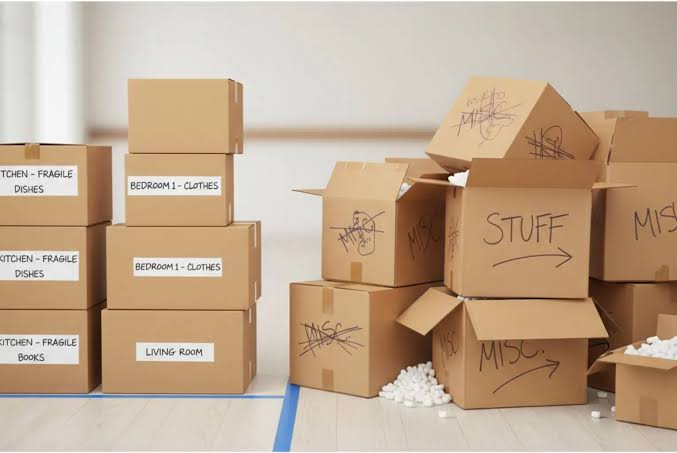
The best system is the one that lets you identify a box quickly without opening it. For most household moves, use this simple format:
ROOM – BOX NUMBER – CONTENTS – SPECIAL INSTRUCTION – PRIORITY
For example:
KITCHEN – Box 12 – Plates & glasses – FRAGILE – Open first
This gives you a practical moving box labelling system without making packing more complicated. If you are using professional help, clear labels can also make the moving process easier for the removal team. If you are arranging packing service, agree on the labelling system before packing begins so everyone uses the same format.
For larger moves, you can also use the same system with your full vs part packing plan, particularly if some rooms are being packed professionally and others are being handled by you. The goal is simple: when a box arrives at your new home, you should know where it goes, what it contains and whether you need it now. A consistent labelling system can make that first stage of unpacking much less confusing.



No comment