
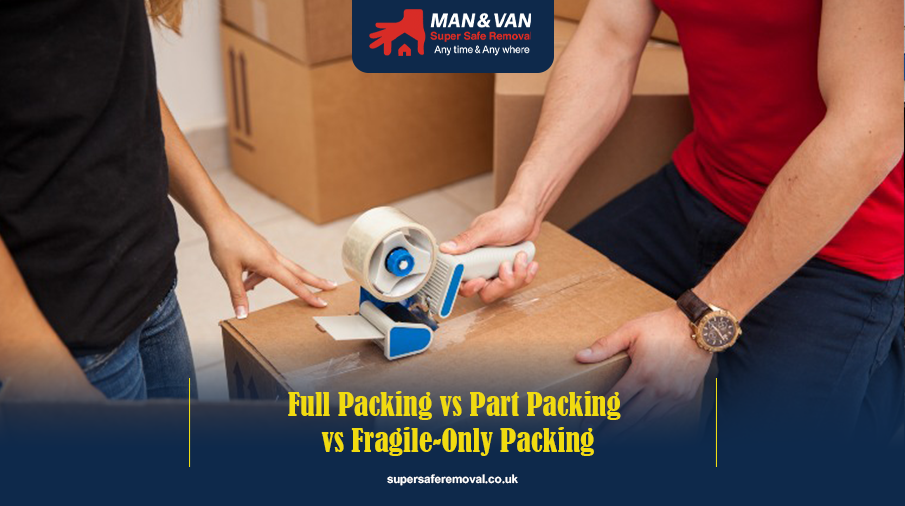
Choosing a professional packing service is not always as simple as deciding whether you want help with packing. You can usually choose between full packing, part packing and fragile-only packing, depending on how much help you need. The right option depends on your available time, the number of belongings you have and which items need extra care. If you are planning a move in London, understanding these professional packing options can help you choose a service that fits your move without paying for help you do not need.
Full Packing vs Part Packing vs Fragile-Only Packing
| Option | What gets packed? | Best for | Advantages | Limitations |
|---|---|---|---|---|
| Full packing | Most or all household belongings, including kitchen items, clothing, books, electronics and other rooms | Busy households, larger moves or anyone short on time | Saves time, organised packing, professional labelling and less work before moving day | More costly than packing some belongings yourself |
| Part packing | Selected rooms or groups of belongings, such as the kitchen, wardrobe or books | People who want professional help with certain areas but prefer to pack everyday items themselves | Flexible and can reduce the amount of work you need to do | You still need to pack the remaining belongings |
| Fragile-only packing | Breakable or higher-risk items such as glassware, artwork and selected electronics | People comfortable packing most items but concerned about delicate belongings | Professional attention where it matters most | Does not cover general household packing |
The main difference is how much of the packing process you hand over to the moving team. A full packing service covers the widest range of belongings, while part packing allows you to choose where professional help is needed. Fragile-only packing is more focused on items that may need additional protection and careful handling.
What Is Full Packing?

A full packing service is designed for people who want the moving team to handle most of the packing before the move. Depending on your booking, this can include everyday belongings from different rooms, such as clothing, books, kitchen items and household goods. The team can use suitable packing materials, organise belongings by room and label boxes so they are easier to identify at the new property. This can make the unpacking stage more manageable because you have a clearer idea of what each box contains and where it belongs.
Full packing can be particularly useful if you have a busy schedule, a large property or limited time before moving day. Instead of spending several evenings or weekends preparing boxes, you can leave much of the work to the professionals. The exact scope should always be confirmed before booking, including what is included, which materials are supplied and whether unpacking is part of the service.
What Is Part Packing?
A partial packing service gives you more control over what the movers pack. You might decide to pack clothing, books and everyday belongings yourself, while asking the moving team to handle the kitchen, electronics or another room that needs more time and care. This option can suit households that want to reduce their workload without paying for a full packing service. It also gives you the flexibility to keep personal or regularly used belongings under your own control until closer to moving day.
Before booking, make a clear list of the areas you want professional help with. This avoids confusion and makes it easier for the packing team to prepare the right materials and estimate the work involved.
What Is Fragile-Only Packing?
Fragile-only packing focuses on belongings that are more vulnerable to damage during handling and transport. This may include glassware, artwork, mirrors, delicate ornaments and certain electronics.
The purpose is not to explain how to pack fragile items yourself, but to help you decide whether professional assistance is useful for these belongings. If you are happy to pack clothes, books and other everyday items yourself but are concerned about your breakables, this can be a practical middle ground.
It is worth identifying fragile or high-risk items before your move so the packing team knows exactly what requires attention. Large artwork, unusual-shaped items or valuable belongings may also need to be discussed in advance.
Which Packing Service Should You Choose?

A simple decision rule can make the choice easier:
- Choose full packing if time is your main concern: If you have a busy schedule or simply do not want to spend days preparing boxes, a full packing service can take much of the work off your hands.
- Choose part packing if you want to handle everyday belongings yourself: This works well when you are comfortable packing clothes, books and other straightforward items but want professional help with selected rooms or more demanding belongings.
- Choose fragile-only packing if breakable items are your main concern: If most of your household can be packed yourself but you are worried about glassware, artwork or delicate electronics, professional help can be focused where it is most useful.
Planning Your Moving Packing Service in London
Good planning makes any packing option easier. Start by deciding which belongings you will pack yourself and which ones you want the movers to handle. Keep aside anything you need before moving day, and make sure the agreed packing scope is clear. If you need broader support, you can explore our packing services London to see how professional packing can fit into your move. If you are arranging the complete move as well, our London house removals service can help you plan the packing and removal process together.
The best packing option is not necessarily the one that includes the most work. It is the one that matches your time, belongings and priorities. By deciding what you genuinely need help with before moving day, you can choose a packing service that makes the move more organised without taking control away from you.



No comment