
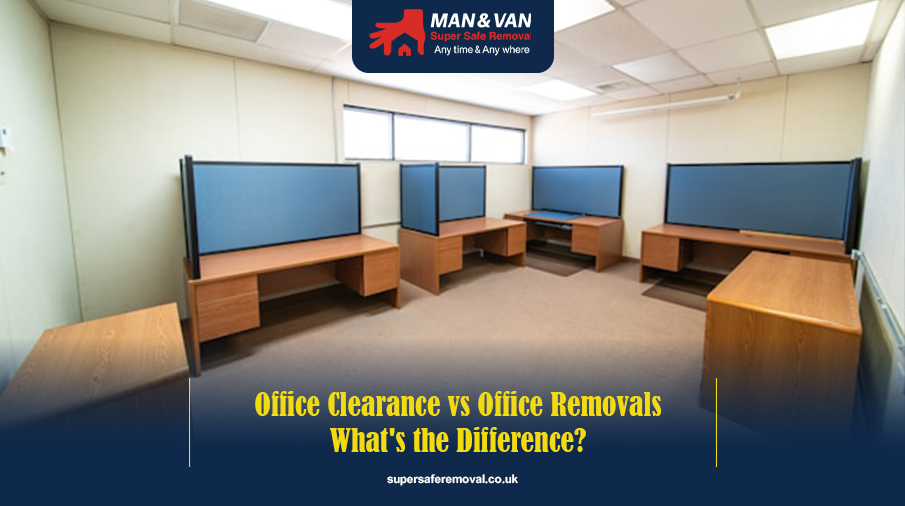
When a business is changing premises, closing an office or simply getting rid of unwanted equipment, it is important to choose the right service. Office clearance vs office removals is not really a question of which service is better. The two services solve different problems: office removals are about moving the contents of your workplace to another location, while office clearance is about removing unwanted contents from the premises. Understanding the difference can help you avoid paying for a service you do not need and make your plans much easier.
Office Clearance vs Office Removals: The Main Difference
The simplest way to look at it is:
Office removals = moving things you want to keep.
Office clearance = removing things you no longer need.
An office move might involve desks, chairs, computers, filing cabinets, shelving and other equipment being carefully packed, loaded and transported to a new workplace. An office clearance has a different purpose. It may involve removing unwanted furniture, old equipment, boxes, fittings or other contents when a business is downsizing, closing or changing how its space is used.
| Factor | Office Removals | Office Clearance |
|---|---|---|
| Main purpose | Move office contents to another location | Remove unwanted office contents |
| Destination | New office, storage facility or another address | Usually removal from the premises |
| Furniture | Usually kept and transported | Usually unwanted items are removed |
| Equipment | Moved to the new location | Items may be removed if no longer required |
| Planning | Move date, access, packing and transport | Inventory, access and removal arrangements |
| Best for | Relocating a business | Emptying or reducing an office |
| Storage | May be needed during the move | May be useful for items being kept separately |
The distinction is important because a business may actually need both services.
When Do You Need Office Removals?

You need office removals when your business is moving its belongings from one location to another. For example, your company might be:
- Moving to a larger office
- Moving to a smaller office
- Relocating to another part of London
- Leaving a rented office
- Moving between buildings
- Combining two workplaces
- Temporarily moving while premises are refurbished
In these situations, the contents of the office still have value to the business. The objective is to transport them safely and efficiently rather than dispose of them. A planned office move can involve much more than carrying desks into a van. The team may need to consider packing, labelling, furniture dismantling, building access, loading areas and the order in which items are moved. For businesses planning a relocation, our London Office Removals service can provide the appropriate route when the main objective is to transport office contents to a new address.
When Do You Need Office Clearance?
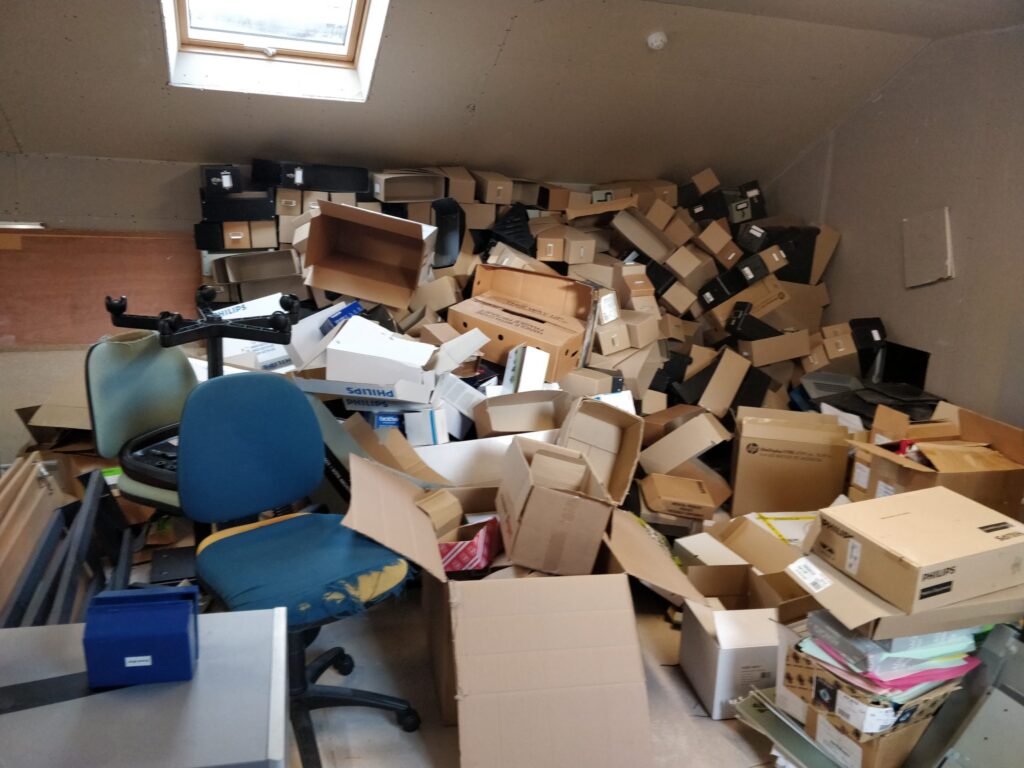
Office clearance is suitable when you need to empty a workplace or remove items that are no longer required. Common situations include:
Closing a business
If a company is shutting down a physical office, there may be desks, chairs, shelving, storage units and other contents that need to be removed.
Downsizing
A business moving to a smaller workplace may not have room for all its existing furniture. Some items may be kept while others need to be cleared.
End of a lease
A landlord or lease agreement may require the premises to be cleared before the space is handed back.
Refurbishment
An office being redesigned may need furniture and other contents removed before work begins.
Replacing old furniture
If a business is replacing desks, chairs or storage equipment, the unwanted items may need to be cleared from the premises.
The key question is simple: Are these items going somewhere else, or do you no longer need them?
What Happens During an Office Removal?
An office removal normally starts with planning the move. The removal team needs to understand what is being moved, where it is going and what access is available at both locations. Larger office moves may also need careful scheduling to reduce disruption to normal business operations. The process can include:
- Planning the move
- Identifying furniture and equipment
- Packing and labelling items where required
- Dismantling suitable furniture
- Loading the vehicle
- Transporting the contents
- Unloading at the new premises
- Reassembling furniture where included in the service
The exact process depends on the size and requirements of the business. For example, moving a small office with a few desks is very different from relocating a larger workplace with multiple rooms, meeting furniture and extensive storage.
What Happens During an Office Clearance?
Office clearance follows a different process because the destination is not normally another office. First, the items that need to be removed should be identified. This helps separate anything the business wants to keep from unwanted contents. The team can then plan access, loading and removal. Depending on the service being provided, office clearance may include removing:
- Desks
- Office chairs
- Filing cabinets
- Shelving
- Tables
- Storage units
- Unwanted boxes
- Other redundant office contents
It is important not to assume that every clearance company handles every type of waste or disposal in the same way. If disposal, recycling or waste-carrier arrangements are important to your project, check exactly what the provider offers before booking.
Can You Need Both Services?

Yes. This is one of the most useful things to understand when comparing office clearance vs office removals. Imagine a business moving from a large office into a smaller one. The company wants to take 20 desks, several chairs, computers and important documents to the new premises. Those items need an office removal service. However, the old office also contains 15 unused desks, broken chairs and storage furniture that the company no longer needs. Those items may need to be dealt with as part of an office clearance. In this situation, the move and clearance are two separate tasks.
The same can happen when a business is temporarily moving into storage. Items that will be used later may go into storage, while unwanted items can be cleared separately. A London Business Storage service may therefore be relevant when a company needs somewhere secure for items it wants to keep but cannot take to the new office immediately.
Office Clearance or Office Removals: Which One Do You Need?
Use this simple decision rule:
You are moving the business and keeping the office contents
→ Office removals
You are emptying an office and getting rid of unwanted contents
→ Office clearance
You are moving some items and getting rid of others
→ You may need both
You are keeping items but do not have space for them yet
→ Office removals plus storage may be appropriate
This distinction can also make it easier to explain your requirements when requesting a quote. Instead of simply saying that you need help emptying an office, prepare a basic list of what is moving, what is staying and what is no longer required.
What Should You Check Before Booking?
Before arranging either service, make sure you know:
- Which items are being kept
- Which items are being removed
- Where kept items are going
- Whether furniture needs dismantling
- How the building can be accessed
- Whether there are lifts or stairs
- Where vehicles can load
- Whether the move or clearance has to happen outside business hours
- Whether storage is required
- What is included in the quoted service
For office clearance, also ask how unwanted items are handled and whether any particular materials or equipment fall outside the service. For office removals, make sure the removal company understands the size of the move, access requirements and any important deadlines.
Office Clearance vs Office Removals: A Simple Way to Decide
The difference between the two services comes down to the purpose of the job. Office removals move your business belongings. Office clearance removes unwanted office contents. If you are relocating your workplace and want to take your furniture and equipment with you, you need an office removal service. If you are closing, downsizing or emptying a workplace and no longer need some of its contents, office clearance may be the appropriate service. And if you are doing both at the same time, separating the items into “move”, “store” and “clear” categories can make the whole project much easier to organise.



No comment