
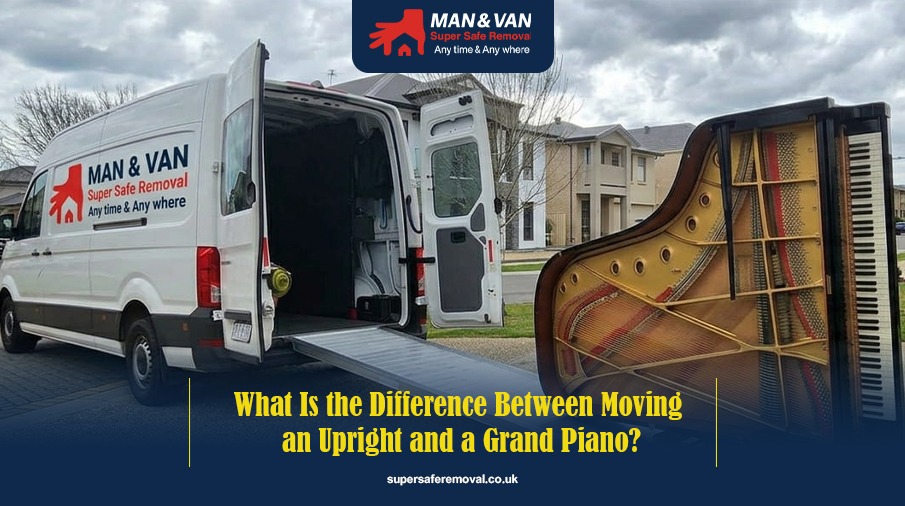
Moving a piano is very different from moving an ordinary piece of furniture. Pianos are heavy, difficult to grip and sensitive to impact, so their size, shape and access route all need to be considered before they are moved. The difference becomes even clearer when comparing an upright vs grand piano moving. An upright piano has a tall, compact shape that can make it easier to position in some homes. A grand piano is much wider and has a different structure, with legs and a large lid that require additional protection and careful handling.
Whether you need an upright piano removal or grand piano removal, the removal team should assess the piano, property and access before deciding how it can be moved safely.
Upright vs Grand Piano Moving: What is Different?
The main differences come from the piano’s dimensions, shape and construction.
| Factor | Upright piano | Grand piano |
|---|---|---|
| Shape | Tall and relatively narrow | Long, wide and curved |
| Main access issue | Height and narrow routes | Width, length and turning space |
| Legs | Usually integrated into a compact cabinet structure | Separate legs that need careful protection |
| Lid | Smaller cabinet sections | Large lid requiring protection |
| Stairs | Can be difficult because of height and weight | Can be difficult because of size and handling position |
| Handling | Requires controlled lifting and protection | Often requires more specialised handling |
| Space needed | Less floor space | More floor space and clearance |
These differences mean that the same moving method cannot simply be applied to every piano.
Moving an Upright Piano
An upright piano has a vertical cabinet with the strings and other internal components arranged within the tall body. Its footprint is generally smaller than that of a grand piano, but this does not make it a normal item of furniture. An upright can still be very heavy. Its height can also make stairs, doorways and tight corners challenging.

Before an upright piano removal, the team should consider the route from the piano’s current position to the vehicle. Door widths, corridors, staircases, turns and changes in floor level can all affect the handling process. The piano should be properly protected before it is moved. The aim is to protect both the instrument and the surrounding property from knocks and contact during the move.
Moving a Grand Piano
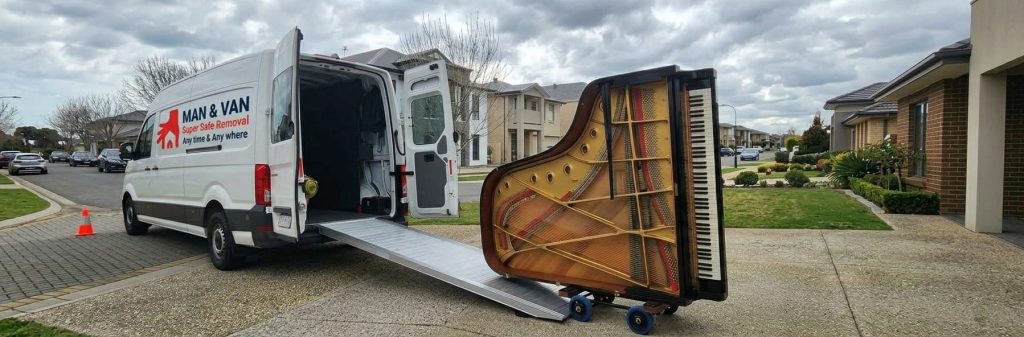
A grand piano presents a different set of handling challenges. Unlike an upright, a grand piano has a wide, horizontal body with a curved side and several legs. Its dimensions can make narrow corridors, staircases and doorways particularly difficult. The legs and lid also need to be considered separately. Depending on the piano and the route, parts may need to be carefully prepared or secured before the piano is moved.

Moving a grand piano therefore requires careful planning rather than simply using more people to lift it. The team needs to understand how the piano can be protected, supported and manoeuvred through the property. The shape of a grand piano can also make turning it through a doorway or around a corner more complicated than moving an upright.
Weight is Only Part of the Problem
It is easy to think that piano moving is mainly about weight. Weight is certainly important, but it is not the only consideration. The dimensions and shape of the piano can be just as important. A relatively compact upright may still be difficult to move down a staircase, while the greater length and width of a grand piano can create problems even where there are no stairs.
The team also needs to consider how the piano can be gripped and supported without putting unnecessary pressure on vulnerable parts. This is why piano transport should be planned around the individual instrument and the route rather than based only on its approximate weight.
Stairs and Access Can Change the Plan
Access is one of the first things to check when arranging piano moving London services. The removal team should know about:
- Narrow doorways
- Tight corridors
- Stairs and landings
- Low ceilings
- Small or restricted lifts
- Steps outside the property
- Narrow gates or entrances
- Limited vehicle access
- Sharp turns between rooms
A route that looks straightforward from the outside may be much more difficult once the piano reaches a staircase or narrow landing. For a grand piano, the additional width and length can make turning space particularly important. For an upright, height and weight may create different challenges. Providing photographs or videos of difficult access areas before the move can help the removal team understand the route.
Protection is Especially Important
Both types of piano need protection during transport. The exterior should be protected against scratches, knocks and contact with walls or door frames. The surrounding property should also be considered, particularly when the piano has to pass through narrow spaces.
A grand piano may require particular attention around its legs, lid and wider body. An upright requires careful protection of its tall cabinet and other exposed surfaces. Specialist equipment may also be required depending on the piano, property and route. The exact equipment and handling method should be decided after the job has been assessed.
Why the Route Matters More than the Piano Alone
A piano can be relatively straightforward to move from one property and extremely difficult to move from another. For example, an upright on the ground floor with a wide front entrance may have a very different handling plan from an upright located upstairs behind several narrow turns.
The same applies to a grand piano. A large entrance and open ground-floor route may make access more manageable, while a narrow staircase or restricted doorway can significantly change the requirements. For this reason, a professional grand piano removal or upright piano removal should start with questions about both the piano and the property.
Should You Use a Standard Removal Service?
Not every removal job requires the same level of specialist handling. However, a piano should not be treated like an ordinary heavy household item. If you are moving a piano as part of a wider house move, tell the removal company about it before booking. This allows the team to establish whether the piano requires specialist handling or equipment. For a piano being moved on its own, single item removals in London can be useful where the job is limited to one substantial item, although the specific requirements of the piano should always be discussed in advance.
The Key Difference Between Upright and Grand Piano Moving
The biggest difference in upright vs grand piano moving is the way the two instruments need to be handled because of their shape and construction. An upright is taller and more compact, while a grand piano is wider, longer and has additional features such as legs and a large lid that require protection and careful preparation.
Both need the right route, protection, equipment and handling plan. The safest approach is therefore not to assume that one moving method suits every piano. Before arranging piano transport, provide accurate details about the piano, its location, the destination and any difficult access. That information allows the removal team to plan the move around the actual instrument and property rather than relying on a standard approach.




No comment