

Moving house can be a big change for children. They may be leaving a familiar bedroom, school, nursery, friends and daily routines behind, while having little control over what is happening. The best way to make moving house with children easier is to give them time to understand the change and keep as much of their normal routine as possible. You do not need to involve them in every moving task. Instead, focus on helping them feel informed, included and secure before, during and after moving day.
Tell Children About the Move
Children usually cope better with a move when they understand what is happening. Explain the move in simple terms that match their age. Tell them why you are moving, where the new home is and what will be different. Give them opportunities to ask questions, even if you have already explained the move several times.
Younger children may focus on practical details such as whether their toys are coming with them or where they will sleep. Older children may be more concerned about leaving friends, changing schools or losing familiar places. Do not promise that everything will be exactly the same. Instead, explain what will change and what will stay familiar.
Help Them Understand What Will Change
Preparing children for moving house is easier when the unknown parts become more familiar. If possible, show children pictures of the new home or take them to see it before moving day. Talk about their new bedroom, nearby parks, school or nursery and other places they are likely to use. For younger children, simple explanations can help them understand the sequence: “We will pack our things, the movers will take them to the new house, and then we will set up your bedroom.” This can make the move feel like a process rather than a sudden change. It is also useful to explain that their favourite toys, clothes and familiar belongings are coming with them.
Let Children Help with Simple Packing
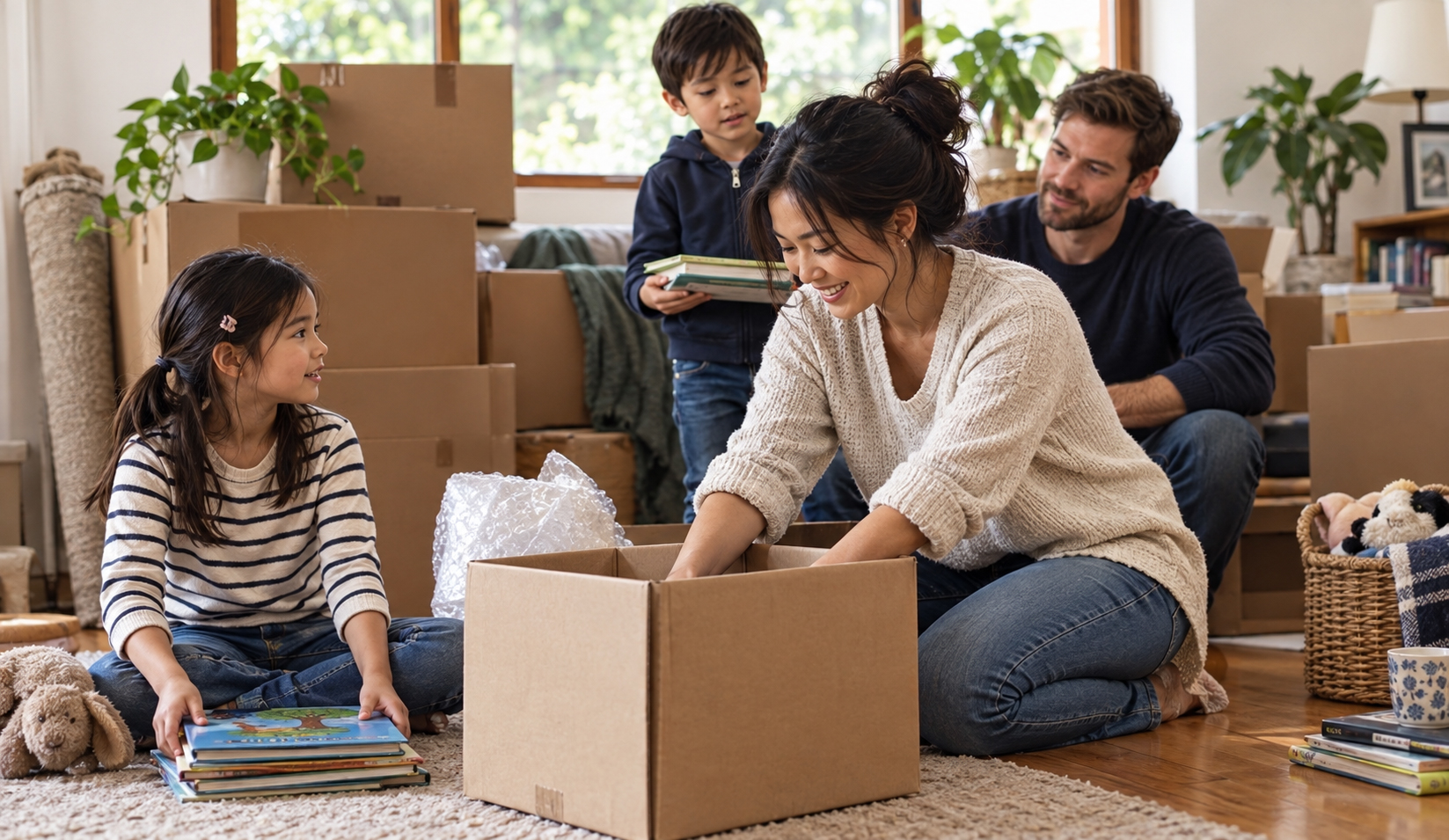
Children do not need to take responsibility for the move, but small jobs can help them feel involved. Depending on their age, they could choose which toys to pack, decorate a box or help sort their books. Older children may be able to pack some of their own belongings with your guidance.
Avoid turning this into another large packing project. The aim is simply to give children a sense of participation. Make sure that important comfort items stay accessible. A favourite toy, blanket, book or other familiar item should not disappear into a box that will only be opened after arrival.
Keep Important Belongings Accessible
Create a small bag or box for each child to use during the move and immediately afterwards. It can contain things such as:
- A favourite toy or comfort item
- A change of clothes
- Pyjamas
- Basic toiletries
- Snacks and a drink
- Books or quiet activities
- Any essential school or nursery items
Keeping familiar belongings close can make a strange day feel more normal. This is particularly useful when moving house with toddlers, as young children may not understand why their familiar surroundings have suddenly changed. If you are also managing the wider practical tasks, your moving house in London checklist can cover the general moving process while this article focuses specifically on your child’s needs.
Plan Childcare for Moving Day
Moving day with children can be difficult because the home may be noisy, doors may be open and unfamiliar people may be moving furniture and boxes. If possible, arrange for younger children to stay with a trusted family member, friend or childcare provider during the busiest part of the move.
This can give children a calmer environment while also allowing adults and the removal team to work without worrying about a child being near heavy furniture or open doors. If childcare is not possible, create a safe and quiet area away from the main moving activity. Keep toys, snacks and familiar activities available and make sure an adult can supervise them.
Set Up Their Room First
One of the most useful things you can do when helping children move house is to make their new room feel familiar as quickly as possible. It does not need to be completely finished. Start with the basics: their bed, familiar bedding, favourite toys and a few everyday belongings.

Having a recognisable bedroom can give children somewhere comfortable to retreat to while the rest of the house is still being organised. For younger children, try to recreate familiar parts of their old bedroom where practical. Keeping the same bedding, toys or bedtime items can make the new room feel less unfamiliar.
Keep Routines Familiar
Routine can provide reassurance during a major change. Try to maintain normal meal times, bedtimes and morning routines as much as possible. If your child attends school or nursery, explain when they will return and what the new arrangements will be.
For toddlers and younger children, familiar routines can be particularly helpful. A normal bedtime story, favourite meal or regular bath routine can provide something predictable during an otherwise unusual period. You may not be able to keep every routine exactly the same during the move. That is fine. Focus on keeping the parts that matter most to your child.
Help Children Settle Into the New Home
Settling into a new home does not necessarily happen on the first day. Give children time to explore their new surroundings at their own pace. Let them ask questions and talk about what they like or dislike about the new home. You can also involve them in small decisions, such as where to put their toys or which books should go on a shelf. These choices can help the new space start to feel like theirs.
If they are worried about leaving friends, school or nursery behind, give them opportunities to stay connected where appropriate. Starting a new routine can take time, so reassurance is often more useful than expecting them to feel comfortable immediately.
What Should Children Do on Moving Day?
There is no single answer for every family. Younger children are often better away from the main removal activity, while older children may want to be involved in small ways. If children stay at home, make sure they have a safe place away from heavy lifting and busy walkways. Keep them away from open doors and areas where furniture is being carried.
Older children might help with simple tasks such as checking their own box or choosing where a few belongings should go. They should not be expected to supervise the move. The main priority is keeping them safe and giving them a calm place to spend the day.
Give Them Time to Adjust
Moving house with kids is not only about getting everyone from one property to another. It is also about helping children feel that their new home is a safe and familiar place. Some children may be excited about the change, while others may feel sad, worried or unsettled. These reactions can vary by age and personality.
Listen to their concerns and give them space to talk. Remind them of the familiar things they have brought with them and focus on building new routines. If you are arranging a smaller move, our apartment removals London service can help with the practical side of moving while you focus on supporting your children through the change.
For the wider relocation, choosing a reliable local removals London service can also reduce some of the practical work you need to manage on moving day. The most important part of moving house with children is not making the move completely stress-free. Some disruption is normal. The goal is to make the change easier to understand, keep important routines and belongings familiar, and give children enough time to feel at home in their new surroundings.




No comment