
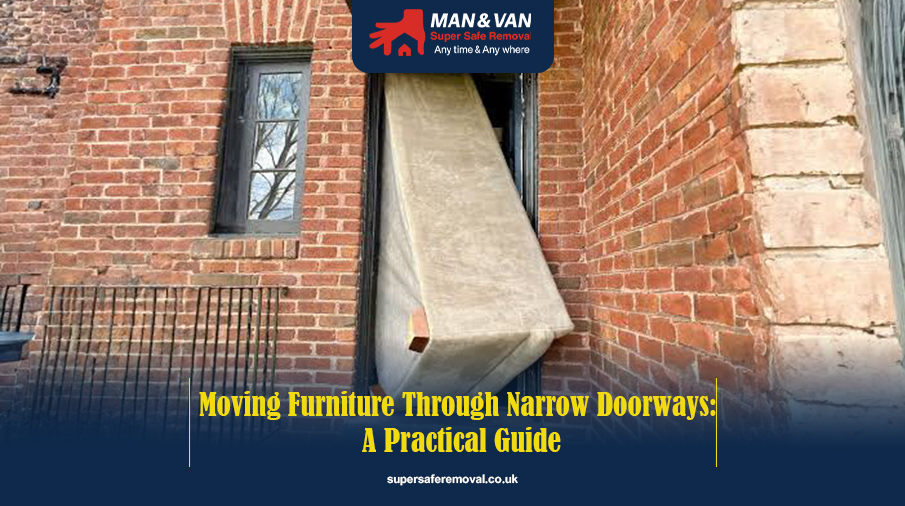
Moving furniture through narrow doorways can be tricky, especially when you have a large sofa, wardrobe or table that seems too wide to fit. The good news is that an item that looks too big at first may fit when positioned at the right angle. However, forcing it through can damage the furniture, walls, door frames or floors.
The safest approach is to measure the furniture and the available space before moving day. You should also check hallways, corners and staircases, as a doorway may not be the only obstacle. This guide explains how to move furniture through narrow doorways, what to measure and when to consider dismantling an item or asking professional movers for help.
Measure the Furniture Before Moving It
For moving furniture through narrow doorways. start by measuring the furniture at its widest, tallest and deepest points. Do not rely on the dimensions shown on a product page, as handles, feet, cushions and other parts may affect the actual measurements. For a sofa, measure the full width from arm to arm, the height from the floor to the highest point and the depth from front to back. Check whether the legs or feet can be removed safely.
For a wardrobe or cabinet, measure the frame itself and note any doors, handles or decorative parts that stick out. For tables, check the tabletop dimensions and whether the legs can be removed. Write down the measurements and keep them to hand. If the furniture is unusually shaped, measure the parts that may affect how it can be turned or tilted. This will help you judge whether moving large furniture through doors is realistic before you start lifting.
Measure Doorways, Hallways and Available Clearance
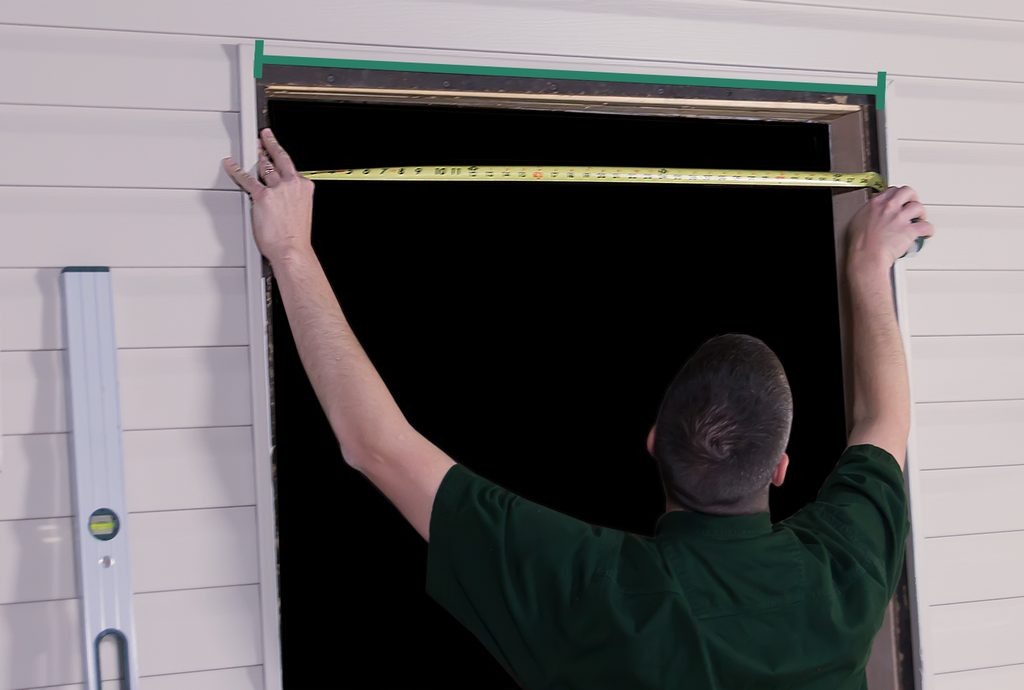
Next, measure the route the furniture needs to follow. The width of the front door alone is not enough to confirm that an item will fit. Measure the clear doorway width between the frame or door stops, rather than the overall width of the door itself. Also measure the usable height. If a door opens into the route, check how much space remains when it is fully open.
Check the hallway width and ceiling height, too. Look for radiators, light fittings, handrails, wall shelves and other features that reduce the available space.
Simple furniture access measurement table
| What to measure | How to check it | Why it matters |
|---|---|---|
| Furniture width | Measure the widest point | Shows the space needed across the opening |
| Furniture height | Measure from the lowest to highest point | Helps assess whether tilting is possible |
| Furniture depth | Measure from front to back | Affects how the item can be turned |
| Clear doorway width | Measure the usable opening | Establishes the available width |
| Doorway height | Measure the usable opening from floor to top | Helps check vertical clearance |
| Hallway width | Measure the narrowest section | Shows whether the item can pass along the route |
| Turning space | Measure the available floor area around corners | Helps identify where manoeuvring may be difficult |
Compare the furniture measurements with the available space, but remember that numbers alone do not always confirm a safe route. The item’s shape, the angle of approach and the space needed to turn it all matter.
Check Corners and Turning Points
Another important thing you should consider for moving furniture through narrow doorways is corners and turning points. A doorway may be wide enough for furniture to pass straight through, but the approach can still cause problems. This often happens in hallways, entrances and rooms with a sharp turn immediately before the door. Stand back and look at the full route. Can the furniture approach the doorway straight on, or must it be turned at an angle? Is there enough space to rotate it without hitting the opposite wall?
Pay attention to the distance between the doorway and the nearest corner. A long sofa, for example, may fit through the opening but be too long to turn in a short hallway. Moving furniture through tight spaces requires more than checking the narrowest measurement. You need to consider how the item will move through each section of the route, including where it must change direction. Never assume that tilting an item will solve the problem. A different angle may help, but it can also make the furniture taller or wider at the point where clearance is limited.
Check Staircases Before Lifting
Staircases add another challenge because the furniture may need to be tilted while moving up or down. Measure the staircase width, ceiling height, landing space and any sharp turns. Check the handrail, bannister and ceiling above the stairs. These can restrict movement even when the staircase itself looks wide enough.
If the route includes a half-landing or a turn, assess whether there is room to change the furniture’s angle safely. A large wardrobe or sofa may be difficult to rotate on a small landing. Moving furniture through narrow stairs should never depend on guesswork. If the route looks uncertain, stop and ask a professional removal team to assess it before attempting the move.
Can Removing a Door Help?
Sometimes, removing an internal door can create a little more working space. This may help when the door itself limits the opening or gets in the way while furniture is being turned. However, taking the door off its hinges will not make the structural doorway wider. Check the actual frame and available clearance first.
Only remove a door if it is safe and practical to do so. Use the right tools, protect the door and hinges, and make sure the door can be stored securely out of the way. If the door is heavy, glazed or difficult to remove, get help rather than risking an injury or damage. Do not remove door frames, trim or fixed fittings without checking what is involved. Altering the structure is not a suitable quick fix for an awkward piece of furniture.
Consider Dismantling Large Furniture

If an item cannot pass through the available space as a complete unit, dismantling may be the best option. Wardrobes, bed frames, tables and some desks can often be taken apart, depending on their design. Remove only the parts that are intended to come off, and follow the manufacturer’s instructions where possible. Keep screws and fittings labelled so the item can be reassembled correctly.
Some sofas have removable legs or sections, which may make them easier to handle. However, not every sofa can be dismantled safely, and forcing parts apart can damage the frame or upholstery. For more detail on what to remove, wrap and prepare before moving day, read our guide on how to prepare furniture for moving.
Protect Walls, Floors and Furniture
Even if the furniture fits, moving it through a tight opening can leave marks or cause damage. Clear loose objects from the route and protect vulnerable floors with suitable floor coverings. Use furniture blankets or other appropriate protective materials on exposed surfaces, corners and edges. Secure protective covers so they do not slip during handling.
Avoid dragging heavy furniture across floors. Do not use door frames, bannisters or handrails as supports for lifting, as these may be damaged by the pressure. Glass, mirrors, polished wood and delicate upholstery need extra care. If an item is fragile, valuable or unusually heavy, professional handling may be the safest choice.
When Should You Call Professional Movers?
Consider professional help for moving furniture through narrow doorways if the furniture is very heavy, valuable, fragile or awkwardly shaped, or if the route includes a narrow staircase, tight landing or sharp turn. You should also ask for advice if measurements suggest there is little clearance or you are unsure whether dismantling is safe. Share your measurements and photos of the furniture and route when discussing the move. This gives the removal team a clearer idea of the access conditions before moving day.
Large furniture removal is not simply about having enough people to lift an item. It also involves planning the route, choosing a safe way to handle the furniture and knowing when an item needs to be dismantled. For specialist items such as pianos, extra care may be needed because of their weight, shape and construction. Our guide to the differences between moving an upright and a grand piano explains why these items may need a different approach.
Final Checks Before Moving Furniture
Before attempting to move furniture through narrow doorways, confirm that you have measured the furniture, doorway, hallway and every important turning point. Check the staircase if the route includes one, decide whether any parts need to be removed and protect the furniture and surrounding surfaces. If the route is too tight or you cannot confirm that the furniture will fit safely, do not force it. A quick assessment by professional movers can help you avoid damage and unnecessary lifting. Remember, the aim is not just to get the furniture through the doorway. It is to get it through safely, without damaging the item or your home.





No comment